AFQT Subtest

ASVAB Arithmetic Reasoning (AR)

AR tests your ability to solve word problems using basic math. It directly affects your AFQT and GT scores — two of the most important numbers for enlistment.

Score use
Counts toward AFQT
Focus areas
5
Examples in this guide
5
Section overview

What AR measures

Ability to solve mathematical word problems involving percentages, ratios, distance/rate/time, work problems, and basic algebra applied to everyday scenarios.

What appears on the test

  • Distance / Rate / TimeCalculate speed, distance, or travel time
  • Percentage ProblemsDiscounts, tax, tips, interest, percent change
  • Ratio & ProportionMixing, scaling, and unit rate problems
  • Work ProblemsCombined work rates, time to complete tasks
  • Geometry Word ProblemsArea, perimeter, volume in context
Worked example

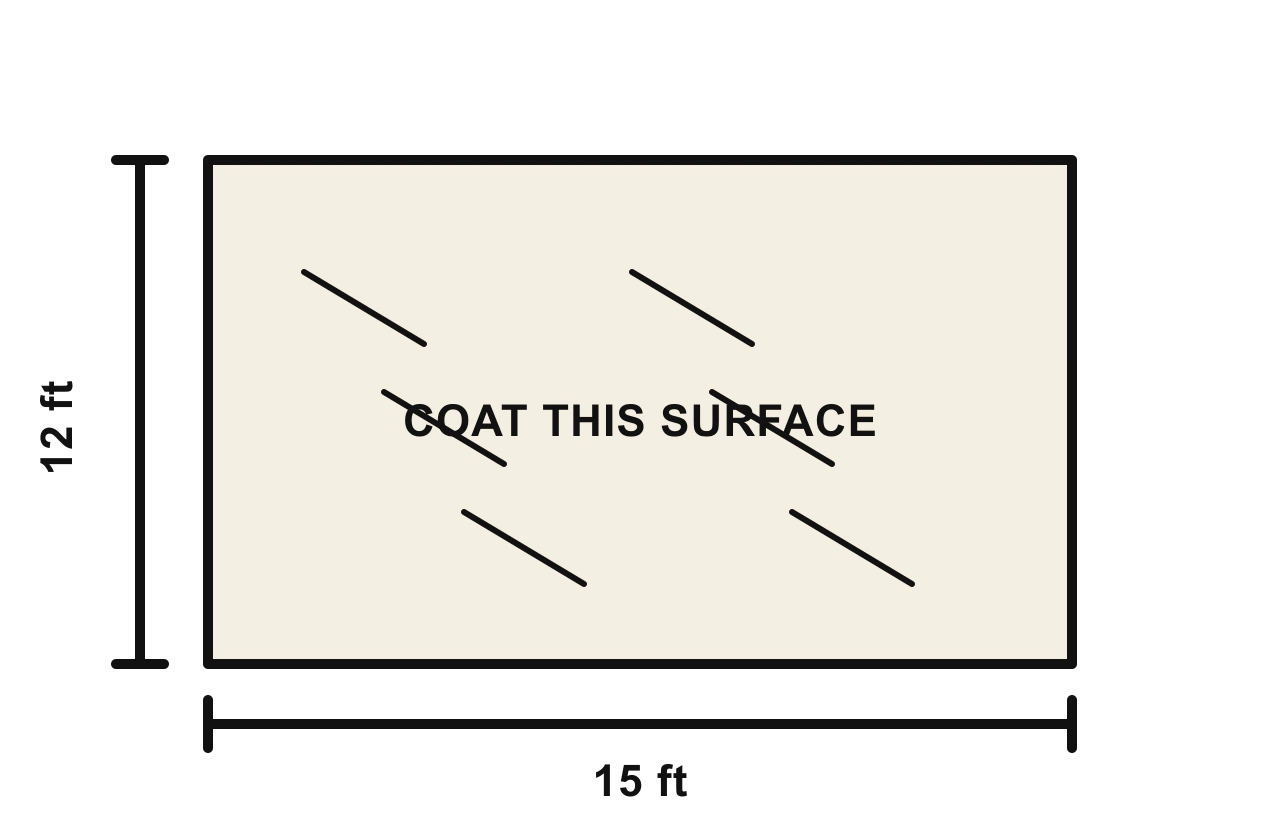
Turn the diagram into an equation

A rectangular surface labeled 15 feet by 12 feet
Area questions test whether you can choose the right operation from a real-world prompt: 15 × 12 = 180 square feet.

What to study for AR

Arithmetic Reasoning is less about difficult computation than translating a short story into the right operation. Train yourself to name the unknown, ignore extra details, estimate the answer range, and then calculate without a calculator.

01

Translate words into operations

Turn phrases such as “per,” “of,” “difference,” and “total” into equations before touching the numbers.

View key facts
  • “Of” often signals multiplication, while “per” signals a rate or division.
  • Define the unknown with a variable and attach units to every quantity.
  • Check whether the question asks for a total, a remaining amount, a rate, or a percent.
02

Ratios, proportions, and percents

Use equivalent ratios for scale problems and convert percent language into a part-whole relationship.

View key facts
  • Percent means “out of 100”: part = percent × whole.
  • For a proportion, cross-multiply only after matching corresponding units.
  • Percent change uses the original amount as the denominator.
03

Distance, rate, and time

Recognize motion questions and decide whether rates combine, differ, or stay constant.

View key facts
  • Distance = rate × time, so rate = distance ÷ time and time = distance ÷ rate.
  • Vehicles moving toward each other have a combined closing rate.
  • Convert minutes to hours before multiplying by miles per hour.
04

Work, money, and averages

Apply unit rates to jobs, purchases, wages, discounts, tax, and mean values.

View key facts
  • A work rate is the fraction of one job completed per unit of time.
  • Apply successive discounts or tax one step at a time, not by simply adding percentages.
  • Average = total of the values ÷ number of values.
05

Measurement and geometry

Use basic area, perimeter, and volume formulas in real-world settings while keeping units consistent.

View key facts
  • Perimeter measures boundary length; area measures surface; volume measures capacity.
  • Convert all dimensions to the same unit before using a formula.
  • Estimate the result to catch a misplaced decimal or wrong conversion.
5 ASVAB-style practice questions

Open a question to review the choices, correct answer, and a short explanation.

Q1Eighteen of 24 recruits completed an obstacle course on the first attempt. What percent completed it?View question and answer
  1. 75%
  2. 70%
  3. 60%
  4. 80%
Correct answerA. 75%

Why: 18 ÷ 24 = 0.75, and 0.75 × 100% = 75%.

Q2Red and blue signal flags are packed in a ratio of 3:5. If a box contains 64 flags, how many are blue?View question and answer
  1. 24
  2. 40
  3. 32
  4. 48
Correct answerB. 40

Why: There are 3 + 5 = 8 equal parts. Each part is 64 ÷ 8 = 8 flags, so blue flags = 5 × 8 = 40.

Q3A vehicle travels at 55 miles per hour for 2.5 hours. How far does it travel?View question and answer
  1. 110 miles
  2. 125 miles
  3. 137.5 miles
  4. 145 miles
Correct answerC. 137.5 miles

Why: Distance = rate × time = 55 × 2.5 = 137.5 miles.

Q4A $120 tool set is discounted 20%, then 6% sales tax is applied. What is the final price?View question and answer
  1. $96.00
  2. $108.00
  3. $102.00
  4. $101.76
Correct answerD. $101.76

Why: After the discount, the price is $120 × 0.80 = $96. Tax makes the total $96 × 1.06 = $101.76.

Q5A tank is 2/5 full. After 18 gallons are added, it is 4/5 full. What is the tank capacity?View question and answer
  1. 45 gallons
  2. 40 gallons
  3. 36 gallons
  4. 54 gallons
Correct answerA. 45 gallons

Why: The added 18 gallons represents 4/5 − 2/5 = 2/5 of capacity. Capacity = 18 ÷ (2/5) = 45 gallons.

AR study strategy

  1. Write the requested quantity and its unit before building an equation.
  2. Estimate first so you know the size of a reasonable answer.
  3. Convert units early and label them throughout the calculation.
  4. For percent problems, identify the part, whole, and percent explicitly.
  5. Review every miss by naming the translation error, not just recomputing the arithmetic.
Optional 7-day study planUse this only if you want a day-by-day way to organize the same core topics.Open the full plan
  1. Day 1

    Translation: Translate 20 short word statements into equations without solving them.

  2. Day 2

    Ratios and percents: Practice proportions, percent of a number, discounts, tax, and percent change.

  3. Day 3

    Rates and motion: Solve unit-rate and distance-rate-time problems with unit conversions.

  4. Day 4

    Work and averages: Practice combined work, weighted totals, and average problems.

  5. Day 5

    Geometry in context: Review perimeter, area, volume, and measurement conversions.

  6. Day 6

    Mixed set: Complete a mixed set slowly and write why each operation is appropriate.

  7. Day 7

    Timed set: Complete 15 mixed questions under time, then sort misses by problem type.

Ready to practice AR?

Try Arithmetic Reasoning questions in the free AFQT practice test and review every explanation.

Practice AR freeCreate free account

Free ASVAB study cheat sheet

Key formulas, composite scores, and score benchmarks in one printable PDF.

Related pages

Guides to all ten ASVAB subtests